Brewing Collectives

Brewed from conversations,
this text can support you when starting
a permacomputing collective.

How To Start a Permacomputing Collective

This is a guide brewed from conversations with initiatives in London (UK), Berlin (DE), Prague (CZ), Philadelphia (USA), Rotterdam (NL), Vienna (AT), Lutruwtia (Tas/AU), County Mayo (IE) and a community from Middle America gathering on servers. This text can support you when starting a permacomputing collective.It isn’t a strict recipe but more of a loose framework that can be freely modified to suit local tastes and conditions. Many actions are cyclical and can be seen as opportunities to revisit or re-purpose later.

We [use fermenting as a metaphor|fermenting_as_a_model_for_collective_action](https://permacomputing.net/use fermenting as a metaphor|fermenting_as_a_model_for_collective_action/) * [Brew the Base](https://permacomputing.net/Brew the Base/): stories about how groups started * [Add the Starter](https://permacomputing.net/Add the Starter/): early organizing & infrastructure * [Let It Ferment](https://permacomputing.net/Let It Ferment/): governance, challenges, and ongoing culture * [Pour and Share](https://permacomputing.net/Pour and Share/): reflections, advice, and spreading practices.

Start where it makes sense for you.

Wait... what is permacomputing?

Permacomputing is both a concept and a community of practice oriented around issues of resilience and regenerativity in computer and network technology inspired by permaculture.

There are huge environmental and societal issues in today's computing, and permacomputing specifically wants to challenge them in the same way as permaculture has challenged industrial agriculture. With that said, permacomputing is an anti-capitalist political project. It is driven by several strands of anarchism, decoloniality, intersectional feminism, post-marxism, degrowth, ecologism.

Permacomputing is also a utopian ideal that needs a lot of rethinking, rebuilding and technical design work to put in practice.

Most importantly, there is no permacomputing kit to buy. See permacomputing as invitation to collectively and radically rethink computational culture. It is not a tech solution searching for a problem. You are free to start your own initiative and use the term permacomputing, however please make sure you understand the purpose and ethos of this project :)

We use fermenting as a model for collective action

Fermentation is a method, a slow, interdependent process shaped by invisible collaborators. Like microbes that preserve and transform, our work ferments beneath the surface, unfolding, unfinished.

  1. Fermentation starts spontaneously. Until the 19th century invention of industrial yeast, most ferments were based on ambient yeasts already present in the environment. When it comes to organising, there is no need for years of planning or institutional support to get a community started. We just need a little bit of initiative.

  2. Fermentation is a multiplying process. A tiny bit of yeast, when fed properly, can take over a huge vat. A nourished community can develop and grow.

  3. Fermentation has momentum. Once you get it going, all you have to do is keep the conditions right. Groups and collectives caring for the right conditions, a welcoming and inclusive atmosphere and a code of conduct for example, keep their momentum.

  4. Fermentation can go dormant and be restarted. When energy levels temporarily dwindle, the group activity slows until a new impulse arrives.

  5. Fermentation is symbiotic - aim for accessibility and intersectionality - connect with other groups and welcome people with related interests and politics, yet with varying backgrounds and perspectives.

Like a fermentation process, this guide invites interaction and transformation. Apply it in parts or as a whole, start where it feels right.

Don’t panic, organise!

Online version at

Brew the base

Bicolor teletext illustration with three character's head floating amongst pixelated speech bubbles and vegetals, their hands are holding a plant each.

Stories about how groups started

Brew the Base

Find your main ingredients, intentions, and inspiring places.

Every collective starts with a feeling — curiosity, frustration, anger, hope or refusal. Before thinking about tools or topics, think about the emotional and spatial ground that will hold your work.

Permacomputing isn’t a movement of optimization — it’s a practice of attention, care, solidarity and critique. You do not need to be a computer expert to start reflecting and countering the environmental and human harm done by the most dominant and extractive forms computational culture.

Suggestions

Quotes

I fell into coding as a teenager, but I came into permacomputing through Marx and political radicalism, more than through gardening. [...] Finding a space that feels inspiring is the most important thing. It just felt right. We wanted a place that isn’t about production or efficiency, but about thinking, reflection, and care. — Ana, London

I just had an itch — and felt that if I didn’t start it, it wouldn’t happen. — Brendan, Berlin

~diez sat down to brainstorm a digital space that would include identities from Middle America, one that would be made in a frugal and simple way. They've been exploring pubnix and the smol web while reading about frugal computing and low-tech, including permacomputing. After that, and thanks to a friend’s enthusiasm and technical assistance, some months later they had the basics up and running. From there, the community has slowly taken shape. — Archipiélago I

The actual kick-off was not due to me but to [Björn - a colleague] who said “Ok. I would be on board. If we team up, we can do it.” If I’m not alone in it and somebody else actually brings some initiative then I can see this happening, even if I’m a bit skeptical about dedicating to yet another cause. — Simon, Vienna

I always wanted to do something in this area but initially I lacked the language for it until I found existent papers and discussions around permacomputing, online on Mastodon – this gave me a framework to start. — Colm, County Mayo

A lot of the people who come into the bookstore and become part of this group or other groups, are working in the tech industry or some kind of job that they may have an issue with. They have these frustrations and they feel, especially at work, that they are in the minority and these topics are not welcome. So it's a bit of a breath of fresh air for some folks to just be able to talk a little more freely about their actual political beliefs. — Steve, Philadelphia

We know amazing work has been done – all this practical stuff in the permacomputing community. It has been a place for people to gather and work on some sort of guiding North Star or framework for thinking about digital technology that doesn't absolutely suck. — d1 and crunk, Rotterdam

Add the starter

Bicolor teletext illustration with five hands droping into a multitude of vegetals from which emerges pixelated speech bubbles.

Early organizing & infrastructure

Add the Starter

Gather people, build rhythm, and set gentle infrastructure.

A collective begins when someone makes an invitation. Start small — a table, a chat, a shared activity — and let curiosity guide the form. Rhythm matters more than scale.

Suggestions

Quotes

It was meant to be a single event, but people asked if it was recurring — so it became weekly.[...] Because it’s weekly, it feels non-committal, but consistent enough for reflection. — Ana, London

Start small — a table, four people, and an idea is enough. [...] We announce it as an informal meetup so people feel they can just come, drink something, and talk. — Brendan, Berlin

It’s not a workshop — it’s a living situation. People do what they like, together. — Michal, Prague

Our spaces of gathering are completely digital. Our main one is an XMPP group, where we discuss and share constantly. We also publish in our social network (Akkoma) to know more about our daily lives. Finally, and more rarely, we use Mumble to hear our voices and chat. — Archipiélago I

A lot of people just are intrigued by the idea actually. I've had a lot of conversations where I'm selling somebody a book and they look at the flyer and they say “what is permacomputing?” and I go into my little spiel. People want to learn more about this stuff. — Steve, Philadelphia

Here people interested in permacomputing are those who live the most remotely because they have a need for a kind of resilience. At least in Ireland, that's what I've noticed. When I ran the online [workshop], I was expecting a bigger diversity of people in terms of geography but I was wrong. People from even further away [joined] and they were glad to be able to join online. [...] there are lots of people who literally, as soon as there is a minor storm, lose power and they lose Internet. [...] So, it's really a question of need. — Colm, County Mayo

Somebody – a very nice person who studies at HKU (Utrecht School of the Arts) and is traveling at the moment, came by Varia and had a lot of energy and time and was keen to start it. Then we made a Signal group and a little pad. — crunk and d1, Rotterdam

Let it ferment

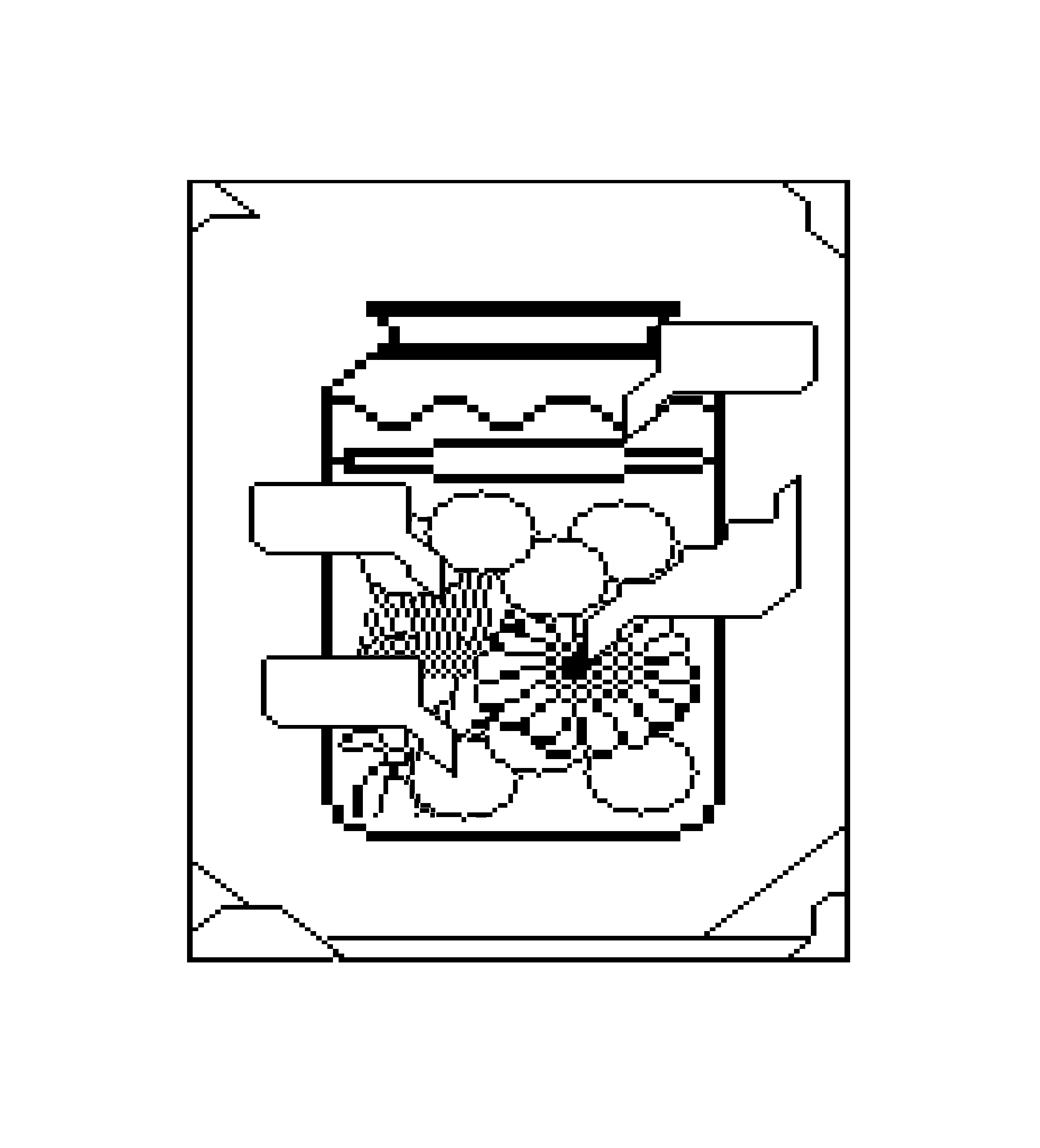
Bicolor teletext illustration of a sealed pot with different pixelated vegetal and speech bubbles fermenting inside.

Governance, challenges, and ongoing culture

Let It Ferment

Give it time. Let it self-organise. Care for contradictions. Encourage others to get involved in organisation and content.

After the initial excitement, the real work is in staying with it — through quiet weeks, shifting roles, and uncertainty. Fermentation takes time: structure can emerge naturally but requires care and trust.

You will also notice when the time comes to write down tasks, divide work and allocate efforts. This doesn’t mean creating top down structures. A healthy collective can survive the absence of its initiators.

Suggestions

Quotes

At first I did everything — website, announcements, logistics — but over time others started hosting workshops. When I went on holiday, the group continued without me. That was a good sign. Overall I would say; start small, be okay with leading at first, and then let it grow away from you. — Ana, London

It’s about seeding the ground, so others can pick it up and spread it. The infrastructure needs to be set up to be able to hold the space, for new people to come so they understand what's going on. — Nancy, Lutruwtia

The work, that is primarily centered around the Netherlands, that's been going on for years, has had a local ripple effect and there are a lot of people active on this topic. We're not that well organized at the moment but there is a lot of diversity in what's going on. — crunk and d1, Rotterdam

It can be a bit challenging to bring some impulses into the conversation but not take over or steer it too much. — Simon, Vienna

What makes me proud is seeing people who first came to listen — then came back to present their own projects. — Brendan, Berlin

Some people decided to meet in person, we are all far away from each other in Ireland, even though I, as the initiator of the group, couldn’t make it. Just seeing photos from this meet up was rewarding. — Colm, County Mayo

We are proud of our consistency over time, seeing how this idea has been transformed into something concrete that has endured. We will soon celebrate 4 years of presence (in 2026), advancing at a snail's pace. Sometimes the most important thing is to hold the space. — Archipiélago I

There's a kind of a fantasy that you can get something set up and then it'll just keep going on its own. And it just never works that way. You have to put in some effort. Just keep putting up flyers every month. — Steve, Philadelphia

I'm doing that with a few, like three or four people. We are doing things very slowly so that we can have everything set up well. So when we start expanding or bringing in people, they don't go ”Oh, so let's look at their website. Oh, it's not on a green server”. I know it's a silly way to do it really, but trying to have some basics in place.[..] I say it really is like compost. If you are going to follow these principles, it will be slow computing. — Nancy, Lutruwtia

Pour and share

Bicolor teletext illustration with two hands bumping their flowery drinks and faucets in the background cabled to a flower.

Reflections, advice, and spreading practices

Pour and Share

Connect outward, share knowledge, renew the brew.

When a collective stabilises, the next step is connection — between cities, practices, and disciplines.

Organise workshops, events, protests, actions, moments of exchange. Write and share documentation, tools, and ideas.

Make use of the knowledge and skills of the group to support and help those in need of alternative computational systems. Whether it is to divest from Big Tech, create and moderate safer spaces, or organise activist projects.

Suggestions

Quotes

Thinking about permacomputing in other regions of the world implies recognizing the vast differences in privileges and resources. Creating and maintaining groups focused on niche topics such as permacomputing or low-tech is very different in territories that have been living in precarious conditions, under occupation, imperialism, and colonialism for centuries. — Archipiélago I

If permacomputing is to be more than a blip, it’ll be because of all the people who aren’t programmers. — Brendan, Berlin

The best way to heal technology is to heal ourselves. [...] Developers often understand complexity but not communication — you need both. — Michal, Prague

We think the group will form organically, without necessarily establishing it in advance. If you decide to formalize a group, try not to have hierarchies, and avoid positions of power as much as possible. Invite people who are knowledgeable about the topic to the meetings, as well as projects that may be interested in the conversation. — Archipiélago I

In order for us to have a circular economy of computation, we need to have computational degrowth. But we cannot really do that because we don't have any notion of how to do that. All learning materials are geared towards “do it quick and use whatever materials there are.” So this is why we are looking to build alternatives. — d1 and crunk, Rotterdam

I think that will be super helpful […] if you're just starting off you can just say okay I've seen that this works in another city so I can just try this out and then you don't have to be super creative on your own to come up with cool agendas for meetings but have something as a basis to build on. — Simon, Vienna

Coming together and starting from there would be my advice, rather than imposing a lot of external ideals. It is really [about] starting from where people are at. What are people's computing habits? Let's talk about them! Do they name their hard drive? What do they name their hard drive and why? It's about embodied practice. For me it's very important to start with hardware [otherwise] you just [produce] e-waste. Use examples of things that people understand. — Nancy, Lutruwtia

[The appeal is] also, for a lot of people, that there finally is something that isn't negative, that isn't like a critique or a “we're all doomed” story but actually something positive. — Steve, Philadelphia

Colophon

Brewing Collectives was initiated by Aymeric Mansoux and Brendan Howell with support from Error 417 Expectation Failed.

Text written by anna andrejew, Brendan Howell and Ola Bonati, based on interviews with Ana Meisel (London Permacomputing Club), Archipiélago I, Colm O'Neil (Wilderland permacomputing group), crunk and d1 (rotterdam.permacomputing.net), Brendan Howell (Berlin Permacomputing Meet Up), Michal Klodner (Node9), Nancy Mauro-Flude (Autoluminescence Institute), Simon Repp (permacomputing Vienna), and Steve McLaughlin (Philly permacomputing + solar punk meetups at Iffy Books, hosted together with Dave Slinger).

Copy editing and advice by Marloes de Valk and Aymeric Mansoux.

Design for the dedicated website and PDF by ungual with illustrations from Raquel Meyers.

Thanks to Delisa Fuller and Dušan Barok for contributing to the early permacomputing wiki to print tools and discussion :)